

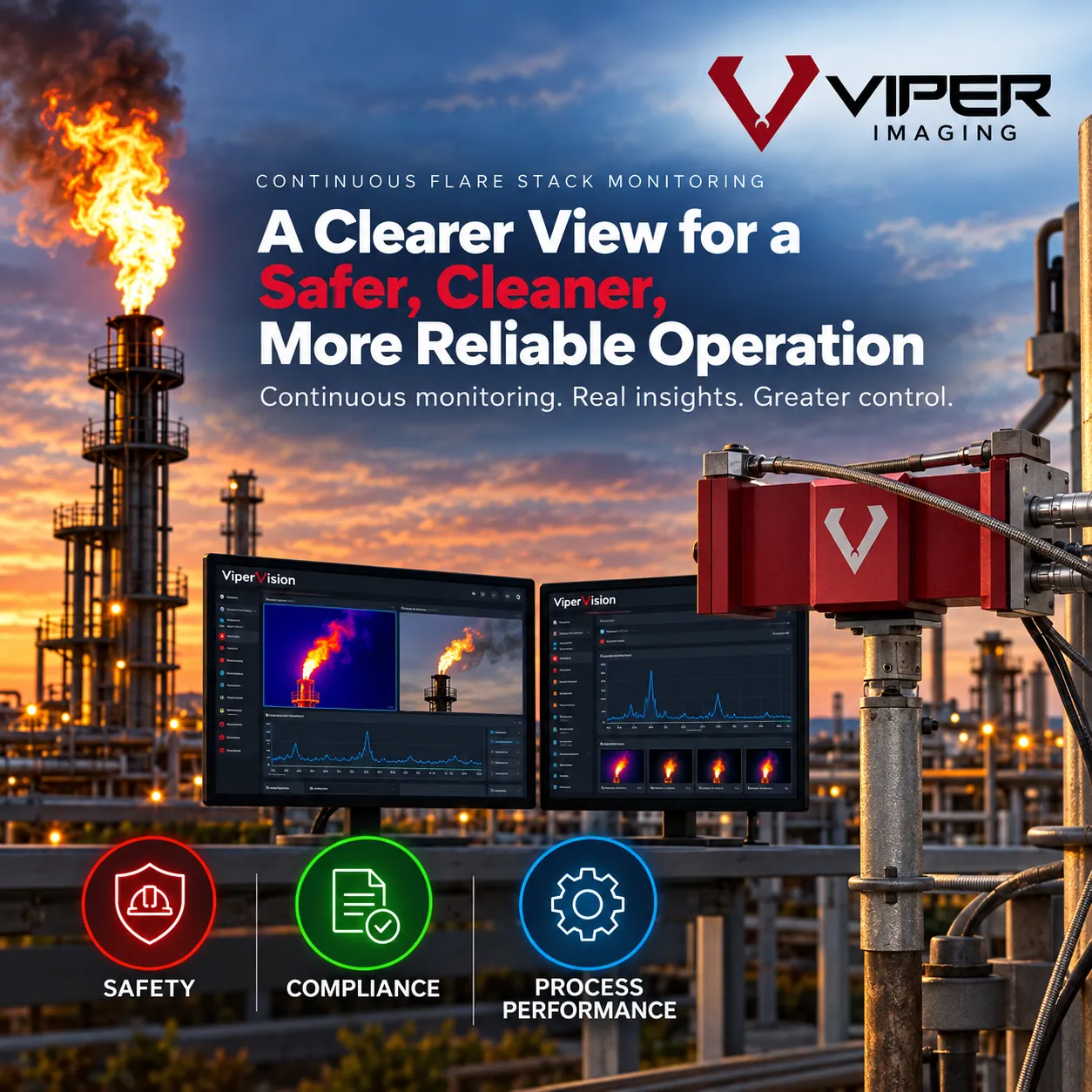
Continuous flare-stack monitoring gives operations teams a constant view of flame, pilot and smoke conditions that can be difficult to assess consistently through routine observation. Viper’s flare-stack monitoring approach combines thermal and visual imaging with ViperVision software to track flame condition, pilot status, smoke and historical changes over time. However, the value of that information depends on how operators use it across these three operational priorities:
-
Early Detection of Unsafe Flare Conditions
A flare is expected to remain available when gases need to be safely combusted. Continuous monitoring helps operators verify conditions that directly affect that function, including whether the pilot is on, whether a flame is present, and how the flame is behaving.
Thermal imaging provides temperature information and a clear indication of flame presence, while visual imaging adds information about flame size, color and smoke. Viper’s system can also generate custom alerts when monitored conditions move outside defined parameters.
That combination can give operations personnel earlier awareness of conditions that require investigation. They can review a lost pilot, abnormal flame profile, or unexpected smoke condition as it happens, with image history available to help determine when the change began and how it developed. This proactive approach helps safety engineers feel more in control.
For sites where flare stacks are remote, elevated or difficult to observe directly, automated monitoring also reduces dependence on someone being physically present at the right moment to identify an abnormal condition. This is particularly useful during changing process conditions, when flare behavior may shift quickly, and the duration of an event matters.
-
Reduce Compliance Risk With a Continuous Record
Flare operation can be subject to requirements related to visible emissions, pilot flame status and other operating parameters, depending on the facility and applicable regulation. The compliance challenge is partly one of evidence: the organization needs a reliable record of how the flare was operating over time.
ViperVision can monitor smoke using the Ringelmann Opacity Score, track pilot and flame status, and maintain historical data that can support review and reporting. This creates a reliable record that environmental compliance officers can trust to demonstrate adherence to regulations.
The U.S. Environmental Protection Agency describes compliance assurance monitoring as a process that uses performance indicators to document continued operation, identify excursions and support corrective response: EPA — Compliance Assurance Monitoring.
Continuous visual and thermal records can support that broader compliance process by showing what was happening at the flare when an abnormal condition was detected. They also let operators evaluate an event’s duration and recurrence.
-
Identify Performance Problems Within the Flare System
Monitoring data can also reveal operational issues that deserve attention before they become larger flare-performance problems.
Changes in flame size, colour, temperature, or smoke can indicate changes in combustion conditions. Pilot interruptions can point to reliability concerns, and a recurring smoke pattern may prompt a review of operating conditions or other parts of the flare system.
Historical data is particularly useful because flare behavior can vary with process conditions. A continuous record allows teams to assess frequency, duration and progression, giving engineering and operations personnel a stronger context for determining whether a condition is isolated, recurring or developing.
Viper’s monitoring system provides a consistent record of observable flare conditions that can be compared with process data, operating events, and maintenance history during an investigation. That record can help teams narrow the investigation scope and determine when further technical review is warranted.
Making Flare Management Proactive and Effective
The practical value of continuous flare monitoring comes from connecting the data to defined operating responses.
An alert about pilot status may require immediate verification. Smoke detection may trigger a compliance review and an operating check. Repeated changes in flame behavior may lead to engineering investigation or maintenance work on the flare system.
Those response paths should be clear before an abnormal condition occurs. Teams need to know which conditions require escalation, who reviews the evidence and where the event is documented. Defined responsibilities also help ensure that monitoring information reaches the people who can act on it.
When thermal and visual data are incorporated into those workflows, flare monitoring becomes part of routine operational oversight. The same information can support immediate safety decisions, compliance documentation and longer-term review of flare performance, giving operators a clearer record of how the system behaves under typical operating conditions.
To learn more about how Continuous Flare Stack Monitoring solutions from Systems With Intelligence can modernize your operations, download our latest white paper: How Continuous Flare Stack Monitoring Enhances Safety and Ensures Compliance for Industrial Facilities.
Shane Womack is Regional Sales Manager – Systems with Intelligence